FF-UH Promotions 2010-2024
This section presents an analysis of the academic and professional trajectories of Physics graduates from the Faculty of Physics at the University of Havana (FF-UH) between 2010 and 2024.
The data has been collected through the Book of Graduates of the University of Havana, and professional and social networks. It includes information on 193 graduates as of June 2025.
We begin here with a general overview of all graduates in this period, followed by focused analyses where the data is segmented by:
- Gender
- Current country or region of residence
These breakdowns aim to highlight patterns in career paths, geographic mobility, and academic progression. This information will serve as the basis for identifying trends and developing further research questions about how various factors shape the long-term outcomes of Physics graduates in the Cuban context.
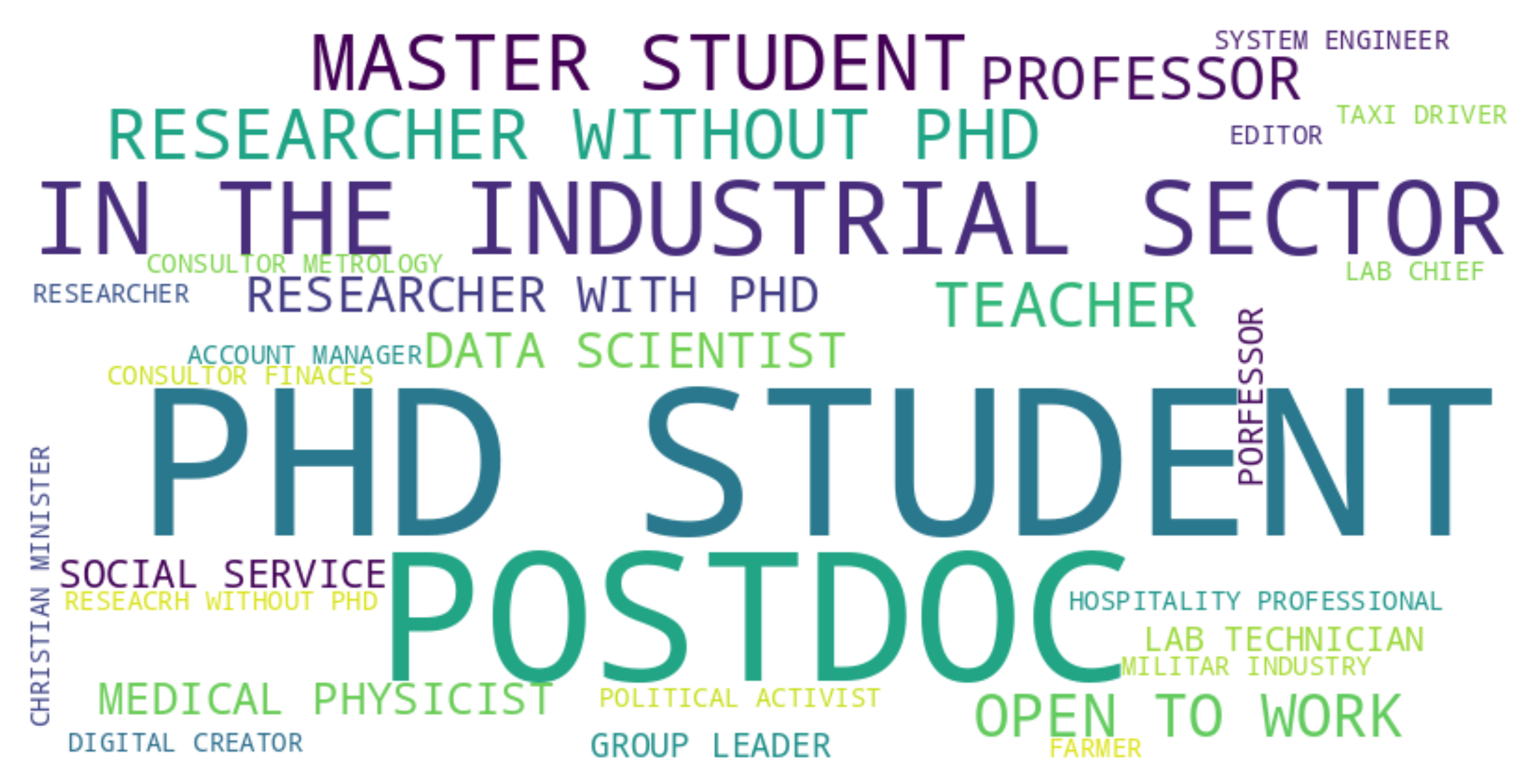
Figure 1: Word cloud of current professions pursued by the graduates in our data. The size of each profession name is proportional to the number of individuals working in that field.
General Overview
The key overall features observed in our dataset are:
- Gender distribution: 78.24% of graduates are male and 21.76% female.
- Geographic location: Approximately 24.35% of graduates currently reside in Cuba, while 69.95% are living abroad. For a 5.18% there are no available data on their current place of residence.
- Academic trajectory:
- At least 47.06% of those graduted before 2020 have completed a doctoral degree (PhD). For a 30.88% of the graduates there are not information on the continuity or not of their academic education.
- Approximately 57.51% remain active in academic or research institutions. This includes those who are pursuing a master or a doctor degree.
- Industry placement: Approximately 21.77% of graduates are working in the private or public sector outside academia, including technology, education, and industry. Around a 5.39% dedicates to other activities and for a 10.36% there are no available data on their current occupation.
Gender Overview
This section analyzes not only the overall gender distribution but also how it correlates with geographic location, education and employment.
The gender distribution of our data shows an average ratio of approximately one woman for every three men. This 25–75% female-to-male proportion is typical of the Bachelor of Physics of the University of Havana, and below the global average. According to UNESCO’s Science Report 2021, women represent nearly one in three researchers worldwide.
However, once they are graduated, the statistics for men and women does not look so different.
| Category | Men (%) | Women (%) | Difference (Women − Men) (%) |
|---|---|---|---|
| Lives in Cuba | 24.1 | 31.0 | 6.9 |
| Holds a PhD | 46.5 | 52.9 | 6.4 |
| Works in Academia | 63.2 | 70.0 | 6.8 |
| Works in Industry | 21.8 | 12.5 | -9.3 |
| Works as Teacher | 4.5 | 5.0 | -1.5 |
Table 1. Percentage of male and female graduates by residence and professional path. Percentages are calculated based on the number of male and female graduates with known responses in each category, excluding those with missing data.
As shown in the table, the percentage difference between men and women never exceeds 10%, indicating no seemingly significant gap. We also performed both a Z-test and a Chi-square test for each category. All the computed p-values exceeded the 0.05 threshold, suggesting that the observed differences in proportions between men and women could be due to random variation. The sample sizes were adequate for these tests, supporting the reliability of these conclusions.
Surprisingly, our analysis found no evidence of gender disparities in the path after graduation within the studied categories in this dataset. This conclusion challenges the commonly held belief in the existence of a “leaky pipeline” effect for women in STEM — the idea that the persistence of prejudices, stereotypes, and gender discrimination leads to a higher dropout rate among women as they progress through the academic path. On the contrary, our data shows that the percentage of graduates who remain in academia is similar for both men and women. Of course, this measure is time-sensitive, and the current dataset has limitations, as the individuals analyzed are still relatively young and not yet at the typical age of stabilization within academic institutions. Therefore, it would be valuable to expand the dataset to include earlier cohorts of graduates in order to assess if and how this phenomenon evolves over time.
Country or Region of Residence
This section explores the geographic distribution of the Physics graduates in our dataset.
Only the 24.35% of the graduates in our data are known to be currently residing in Cuba, while 69.95% live abroad. For a 5.18%, no information is available regarding their current location; those are showed in Figure 2, but excluded from the rest of the analysis.
Figure 2 highlights the progressive increase in the proportion of graduates living outside of Cuba over time. This trend likely reflects broader economic and academic migration patterns, especially in the context of expanding global opportunities for advanced study and employment, and Cuban migrational crisis. Althought this analysis is based on available data and may be subject to incomplete information, the overall pattern aligns with informal accounts of high rates of academic and professional migration among Cuban STEM graduates.
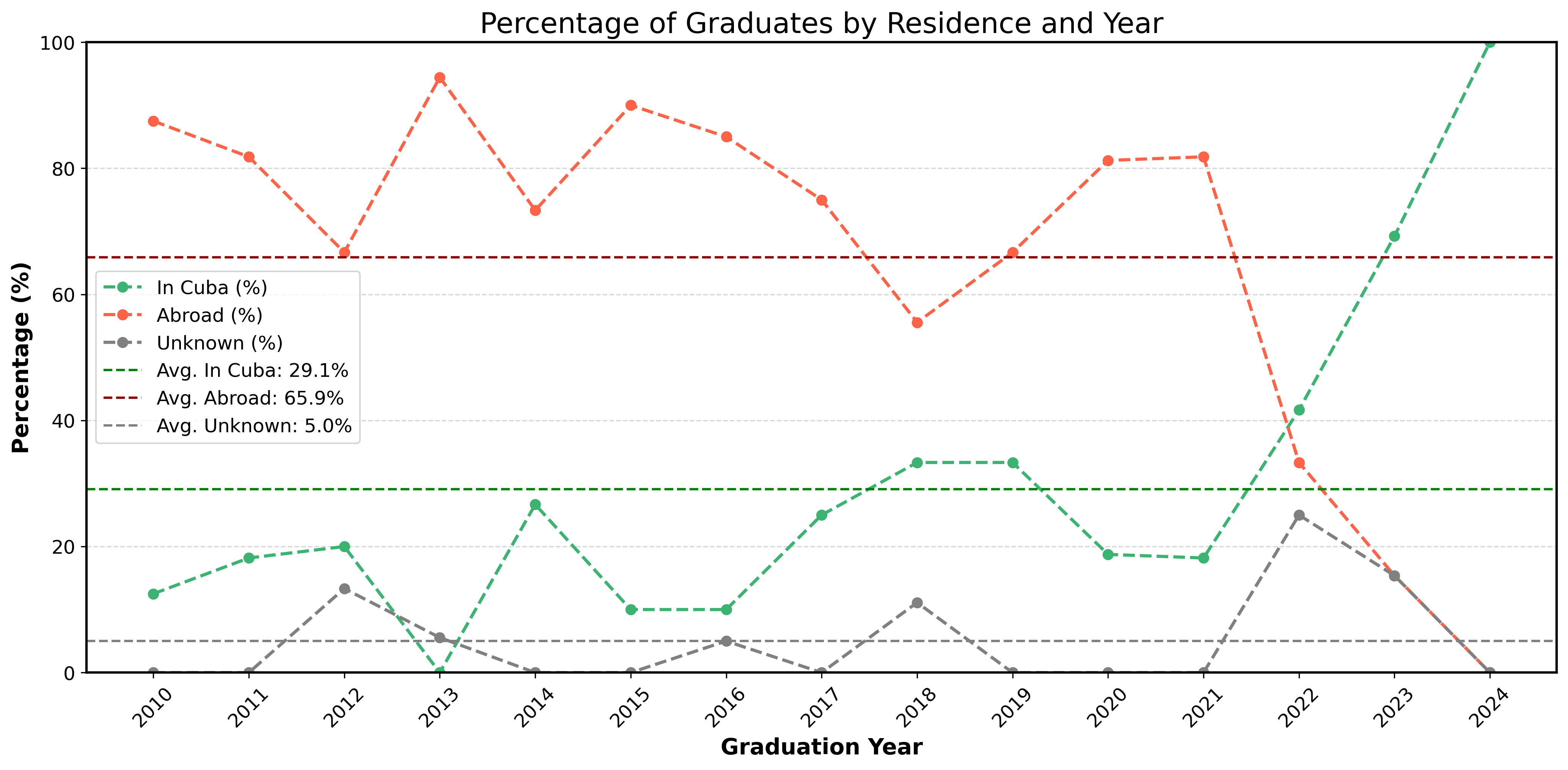
Figure 2: Percentage of graduates per graduation year living in Cuba and abroad (2010–2024).
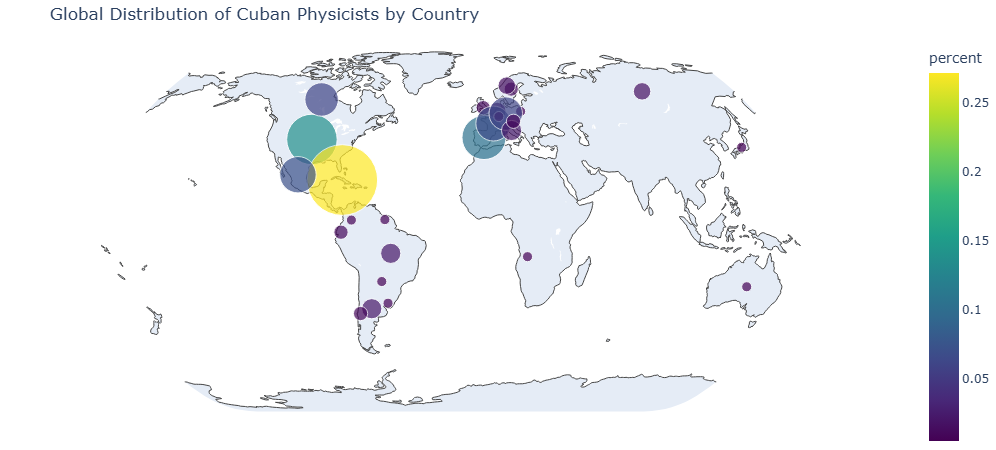
In Figure 3 we show the distribution of graduates by geographical region, with Europe being the region that gathers the higest percentage of them. However, Figure 4 reveals that the countrie with the highest concentration of physics graduates, apart from Cuba, is the United States, followed by Spain. This aligns with the fact that, for many decades, these have been the preferred destinations for Cuban emigrants.
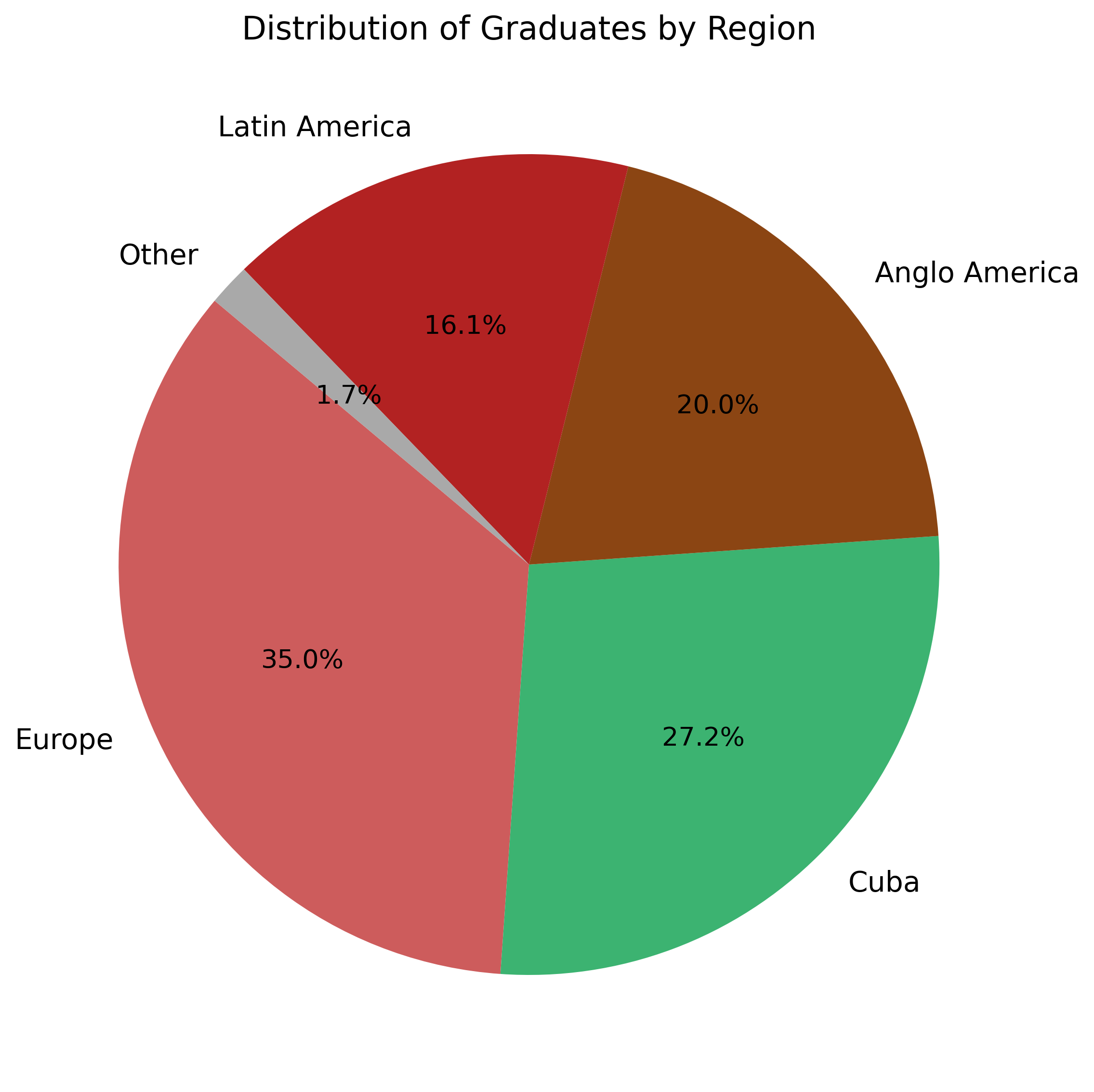
Figure 3: Distribution of graduates by geographical region.
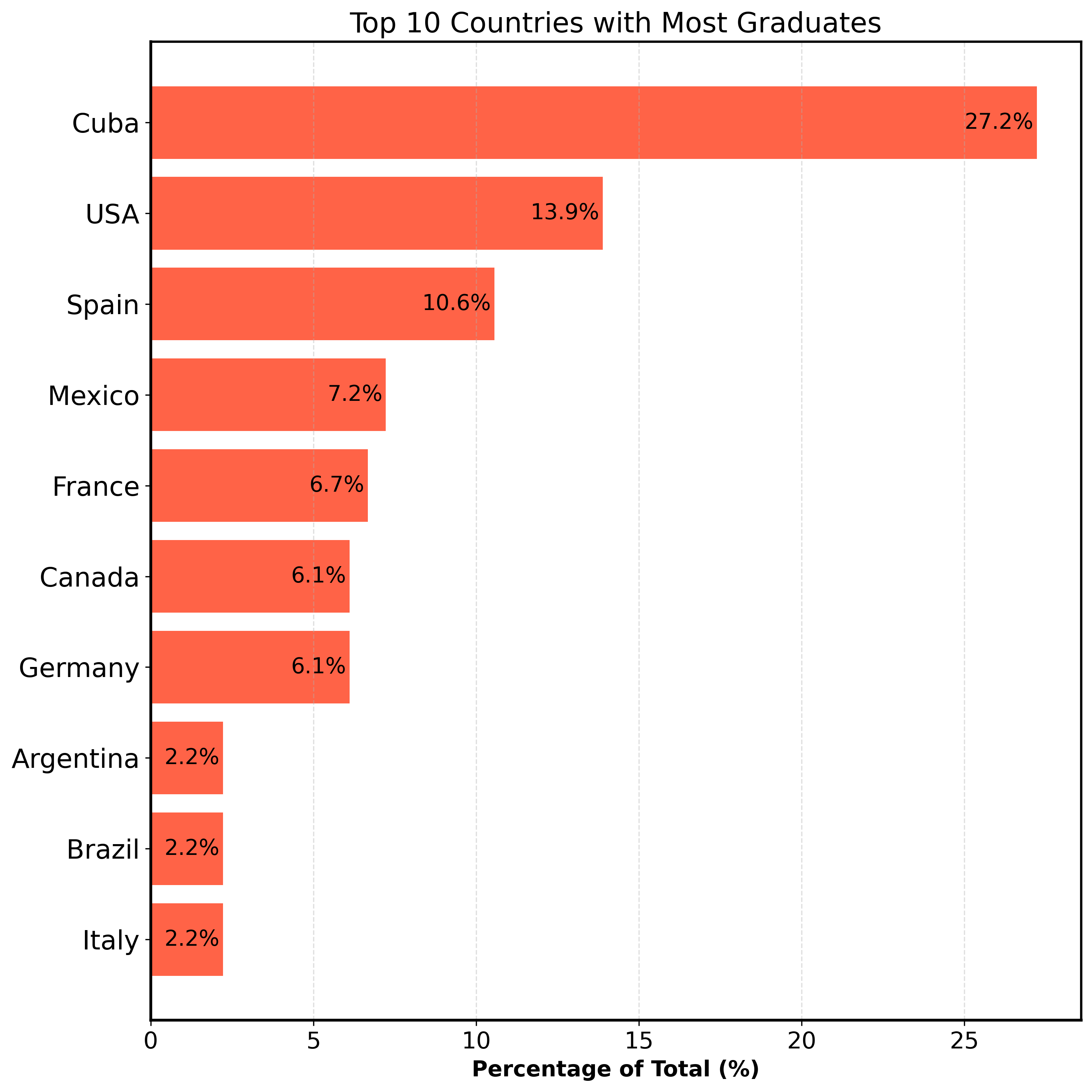
Figure 4: Top ten countries with more graduates.
The impact of geographic dispersion on professional engagement is higher compared to that of gender, as we can appreciate from Table 2.
| Category | In Cuba (%) | Outside Cuba (%) | Difference (Outside − In) (%) |
|---|---|---|---|
| Holds a PhD | 14.3 | 57.5 | 43.2 |
| Works in Academia | 90.2 | 56.1 | -34.1 |
| Works in Industry | 0.0 | 25.8 | 26.2 |
| Works as Teacher | 0.0 | 6.1 | 6.1 |
Table 2. Percentage distribution of graduates linving in and out of Cuba by professional path. Percentages are calculated based on the number of graduates in Cuba and abroad with known responses in each category, excluding those with missing data.
Let us first note that graduates living abroad are significantly more likely to hold a PhD compared to those residing in Cuba. Among those with valid data, 56.1% of graduates living abroad have a PhD, while only 14.3% of those in Cuba do. This high percentage point gap is statistically significant (Chi-squared p = 0.0001), alhtough the sample size is small. This disparity may reflects the greater access to doctoral programs and further work opportunities abroad in contraposition to the limited opportunities for advanced academic training and profesional development within the Island.
The attempt to perform the Z- and Chi-square tests for the rest of the categories in Table 2 reveals that the data is also insufficient for a good statistical analysis with those metrics. Therefore, the interpretation of these results should serve more as a guide for identifying potential trends and informing future, more comprehensive studies rather than as a solid basis for drawing definitive conclusions at this stage.
Anyhow, we would like to highlight that, as far as we know, none of the graduates from the analized period currently residing in Cuba work in industry. This reflects the lack of opportunities and the existence of structural barriers within a country with limited industrial infrastructure. In fact, if we focus on the data for PhD holders (Table 3), we can immediately note that all of those living in Cuba work in academia, while for those abroad the employment panorama is wider, with only half in academia and about 30% in industry. This reinforces our previous conclusions, although, again, the lack of data prevents us from drawing further implications.
| Category | In Cuba (%) | Outside Cuba (%) | Difference (Outside − In) (%) |
|---|---|---|---|
| Works in Academia | 100.0 | 55.0 | -45.0 |
| Works in Industry | 0.0 | 30.0 | 30.0 |
| Works as Teacher | 0.0 | 3.3 | 3.3 |
Table 3. Percentage Distribution of Graduates with a PhD by Residence and Professional Path. Percentages are calculated based on the number of graduates with known responses in each category, excluding those with missing data.
It is also very interesting to analyze the most common occupations pursued by the graduates and how these are distributed across countries. Looking at Figure 5, we observe that the five main positions held by physicists remain largely within the research sector, whether in academia or in industry. This may be a consequence of high levels of qualification, which facilitate international mobility, while importantly, this migration does not entail a loss of qualifications, as graduates generally continue to work in roles aligned with their expertise.
However, there are clear differences in their geographic distribution (Figure 6): industry jobs are concentrated in industrialized countries such as the United States, Spain, and Canada; master’s students are primarily based in Cuba; doctoral students are more concentrated in Europe; and postdoctoral researchers are dispersed across a wide range of countries worldwide. Notably, researchers without a master’s or doctoral degree are found only in Cuba.
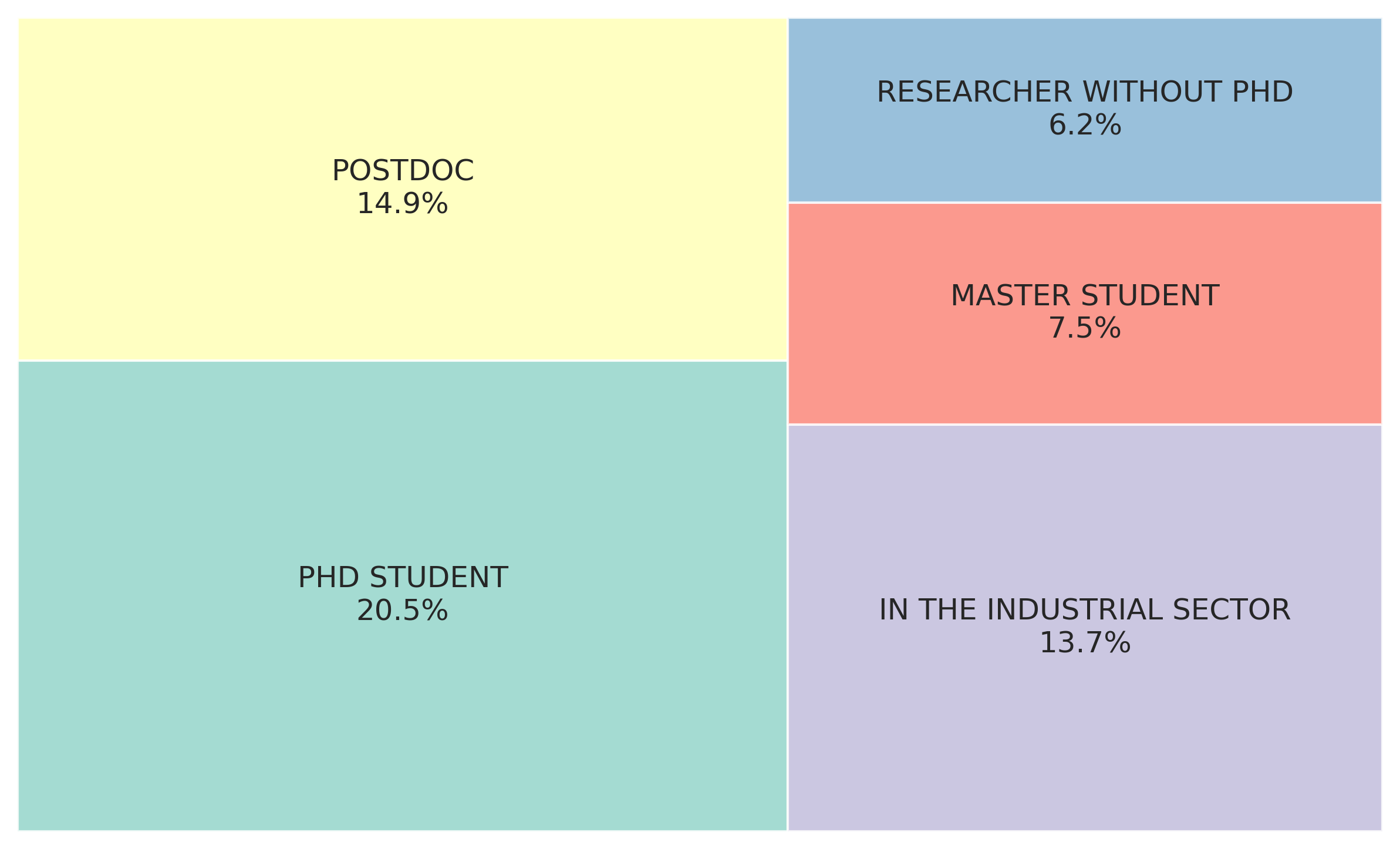
Figure 5: Top five most common occupations among graduates.
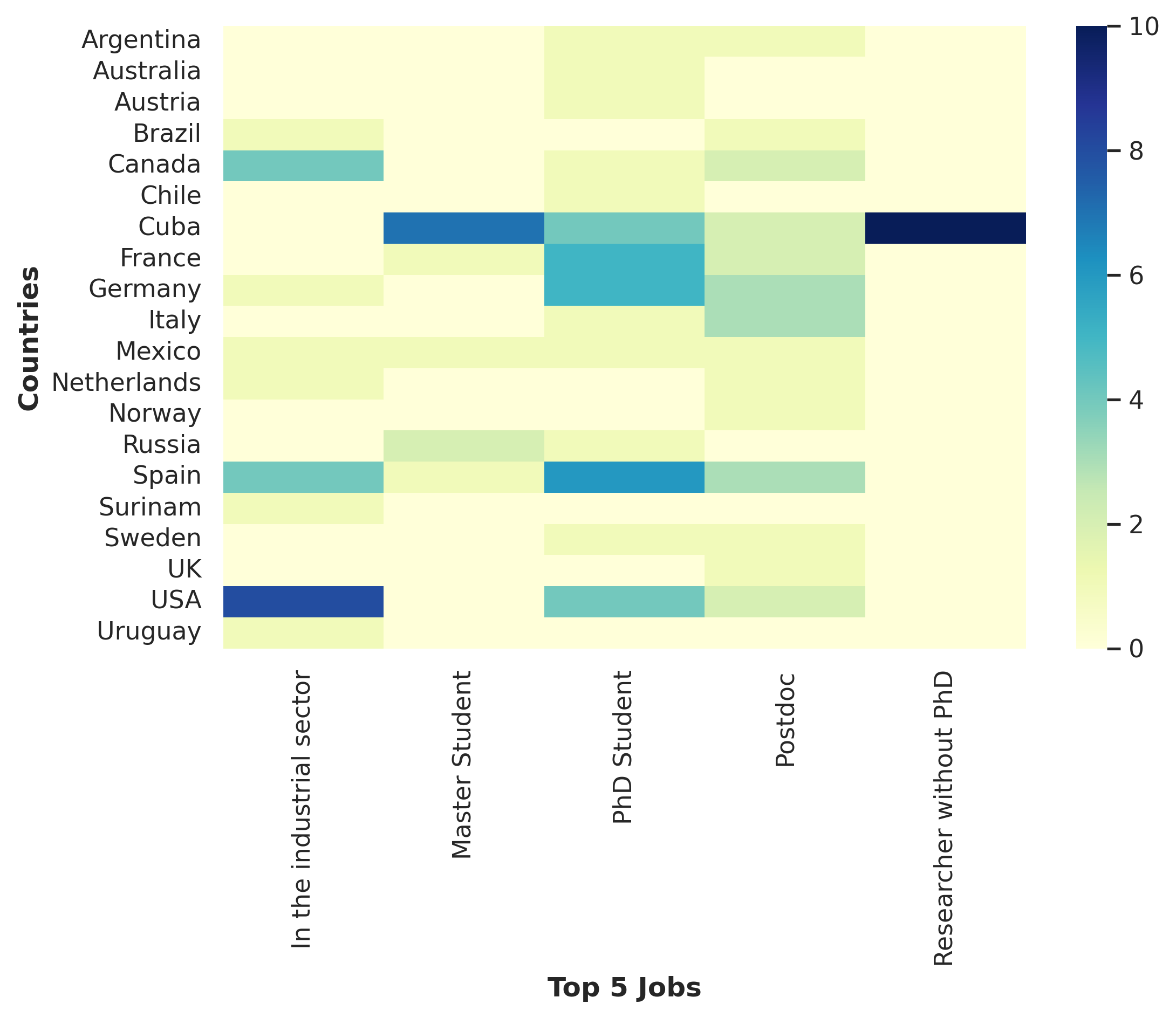
Figure 6: Frequency of the five most common occupations among graduates, broken down by the five most common countries.
The fact that most master’s students remain in Cuba while the majority of PhD candidates move abroad highlights a critical turning point in graduates’ trajectories, when many decide to seek opportunities elsewhere. Moreover, the wide geographic dispersion of PhD students and postdoctoral researchers illustrates the breadth of international opportunities available, and the extent to which Cuban graduates are able to integrate into research systems across different parts of the world.
These glimpses of possible patterns underscore the importance of geographic context in shaping professional trajectories and further support the view that the observed differences should be interpreted as early signals rather than definitive findings. They point to important questions about brain drain and sectoral employment dynamics that merit deeper, more targeted investigation.